Innovative Thread Rolling Solutions for the Military Sector
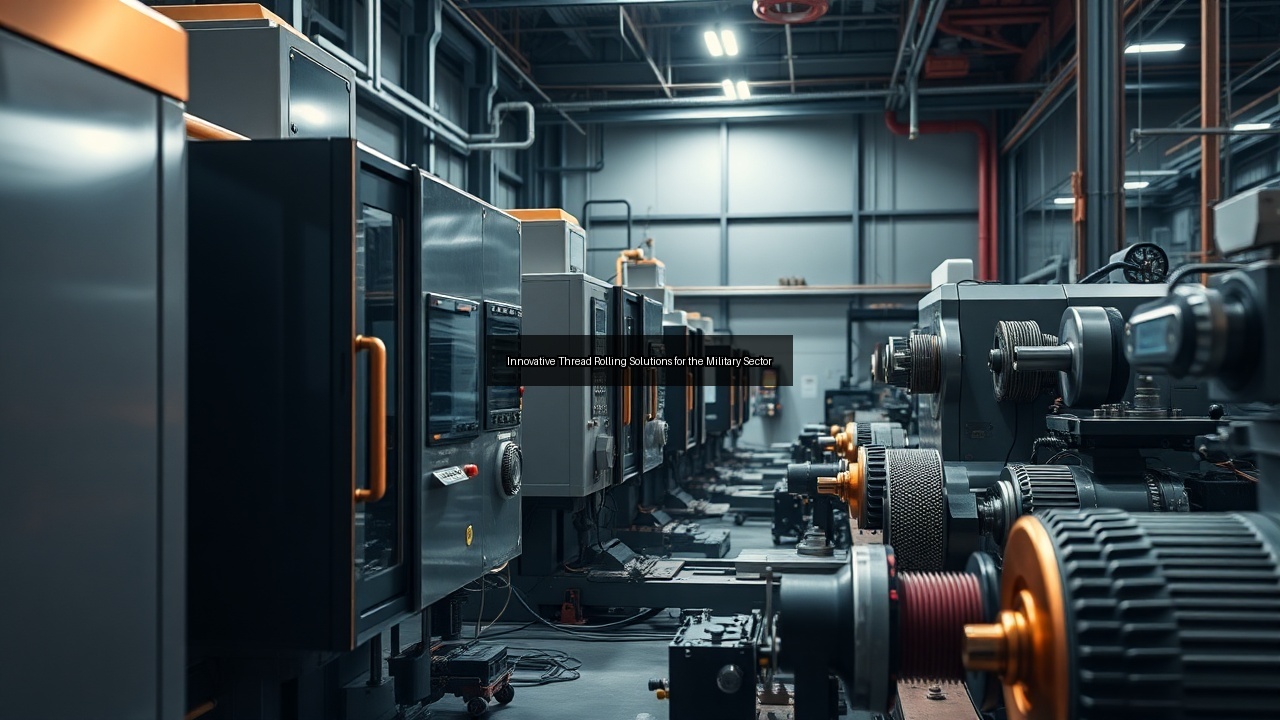
The Importance of Thread Rolling in Military Applications
Defining Thread Rolling Services for Military Use
Thread rolling services play a crucial role in military applications, providing high-strength fasteners essential for various equipment and weaponry. This cold-forming process involves shaping metal into threads by rolling it between two dies, resulting in enhanced mechanical properties and improved fatigue resistance. Unlike traditional machining methods, thread rolling minimizes material waste, making it a cost-effective solution for military contracts that demand precision and reliability. The need for robust and durable threads in military hardware cannot be overstated, as they are integral to the functionality and safety of vital systems.
Advantages of Thread Rolling Over Traditional Methods
Thread rolling offers several advantages compared to traditional machining methods. Firstly, it produces threads with superior tensile strength, thanks to the grain flow alignment created during the rolling process. This results in fewer failures under stress, a critical factor in military applications where reliability is paramount. Secondly, thread rolling services improve production efficiency; they allow manufacturers to create threads quickly and with minimal waste. This efficiency translates into shorter lead times for military contracts, enabling faster deployment of essential equipment. Additionally, the cold-working nature of thread rolling enhances the surface finish of the threads, reducing the need for extensive post-production grinding or finishing.
Key Military Sectors Utilizing Thread Rolling
Various military sectors utilize thread rolling services to fulfill their unique requirements. The aerospace sector relies heavily on high-strength fasteners to ensure the safety and performance of aircraft and spacecraft. In addition, the automotive sector for military vehicles demands durable threads that can withstand rugged conditions. The naval sector also benefits from thread rolling, as it provides fasteners for shipbuilding and maintenance, where moisture resistance and strength are critical. Furthermore, specialized applications in missile systems and defense electronics require precise threading solutions. Across these sectors, thread rolling demonstrates its versatility and effectiveness in meeting stringent military specifications.
Innovative Technologies Shaping Thread Rolling Solutions
CNC Machining and Its Role in Thread Rolling
CNC machining revolutionizes thread rolling services by introducing automation and precision into the manufacturing process. Computer Numerical Control (CNC) machines allow manufacturers to achieve tight tolerances and intricate designs, enhancing the overall quality of threaded fasteners. These machines can seamlessly integrate with thread rolling operations, streamlining workflows and reducing human error. CNC technology enables rapid prototyping and production scaling, which is particularly advantageous for military applications that require both speed and accuracy. Moreover, the adaptability of CNC machining means manufacturers can quickly adjust to changing specifications or new designs, ensuring that military contracts are met efficiently.
EDM Machining: Precision and Efficiency in Thread Production
Electrical Discharge Machining (EDM) plays a complementary role in producing high-precision threads for military applications. This process uses electrical sparks to remove material, allowing for the creation of intricate geometries that traditional methods might struggle to achieve. EDM machining excels in producing complex threads that require exact specifications, making it an ideal choice for specialized military fasteners. The precision of EDM enhances the overall performance and reliability of threaded components, contributing to the safety and effectiveness of military equipment. Additionally, the ability to work with hard metals makes EDM machining a valuable asset in the production of durable fasteners required in demanding environments.
The Impact of Swiss Screw Machining on Fasteners
Swiss screw machining significantly impacts the production of fasteners used in military applications. This method specializes in producing small, complex parts with exceptional precision. The process involves a sliding headstock that feeds the metal wire into a rotating tool, allowing for tight tolerances and intricate threading. Swiss screw machining is particularly beneficial for manufacturing small-diameter fasteners, which are commonly used in various military applications, including electronics and weapon systems. The precision and repeatability of this machining technique ensure consistent results, making it a preferred choice among manufacturers catering to the military sector. Furthermore, the speed of production enhances the ability to meet tight deadlines associated with military contracts.
Materials and Manufacturing Processes in Thread Rolling
Metals Commonly Used in Military Fasteners
Military fasteners must withstand extreme conditions, requiring the use of high-performance metals. Common materials include stainless steel, titanium, and high-strength alloys. Stainless steel offers excellent corrosion resistance, making it suitable for applications exposed to moisture and harsh environments. Titanium, known for its exceptional strength-to-weight ratio, is often employed in aerospace applications where weight savings are critical. High-strength alloys, such as those based on nickel and cobalt, provide the necessary durability and fatigue resistance required for demanding military applications. Manufacturers must carefully select materials to ensure that the threaded components meet stringent military specifications and perform reliably in the field.
The Role of Thread Casting and Grinding in Quality Control
Quality control remains paramount in thread manufacturing to ensure that fasteners meet the rigorous standards required for military applications. Thread casting and grinding are integral processes in maintaining these standards. Thread casting allows for the creation of complex shapes with high precision, while grinding ensures that threads have the necessary surface finish and dimensional accuracy. These processes, when combined, enhance the overall quality of the final product, reducing the likelihood of failures in the field. Rigorous testing and inspection protocols accompany these processes to verify that each batch of fasteners meets the required specifications before being delivered to military clients. This commitment to quality control safeguards both the integrity of military equipment and the safety of personnel.
Exploring the Use of Knurling in Thread Rolling Services
Knurling is a valuable technique in thread rolling services, enhancing the functionality and grip of fasteners. This process involves creating a patterned texture on the surface of a thread, improving its ability to resist loosening under vibration or torque. In military applications, where equipment operates in challenging environments, knurling provides an added layer of security for threaded components. Additionally, knurling can facilitate easier handling and installation, a crucial consideration when dealing with complex military systems. Manufacturers often incorporate this technique into their thread rolling services to meet specific operational requirements, ensuring that the fasteners perform reliably in the field.
Leading Thread Rolling Manufacturers in the Military Sector
American Manufacturers Pioneering Thread Rolling Innovations
American manufacturers have emerged as leaders in thread rolling innovations for the military sector. Companies based in states like Wisconsin have invested in advanced technologies such as CNC machining and EDM to enhance their production capabilities. These manufacturers prioritize quality and precision, ensuring that their threaded fasteners meet the stringent standards set by military contracts. By focusing on research and development, they continually improve their processes and adapt to new challenges in the industry. Their commitment to innovation not only benefits military applications but also sets a benchmark for global standards in thread rolling services.
Case Studies: Successful Thread Rolling Applications in the Aerospace and Oil & Gas Industries
Successful case studies highlight the effectiveness of thread rolling applications in both the aerospace and oil & gas industries, showcasing how these services meet demanding requirements. In the aerospace sector, manufacturers have utilized thread rolling to produce high-strength fasteners for aircraft assembly, contributing to overall safety and performance. Similarly, in the oil & gas industry, threaded components are critical for maintaining the integrity of drilling equipment, where reliability and durability are paramount. These case studies illustrate how thread rolling services not only enhance product quality but also drive innovation across industries, ensuring that fasteners perform optimally in diverse environments.
Inventory Management Strategies for Threaded Fasteners
Effective inventory management strategies are essential for manufacturers of threaded fasteners, particularly within the military sector. Companies must balance the need for readily available inventory with the complexities of production scheduling and demand forecasting. Just-in-time (JIT) inventory systems allow manufacturers to reduce excess stock while ensuring that fasteners are available when needed for military projects. Additionally, implementing barcoding and tracking systems improves visibility and accuracy in inventory management, reducing the risk of production delays. By optimizing inventory strategies, manufacturers can enhance efficiency and responsiveness, crucial factors in fulfilling military contracts on time and within budget.